

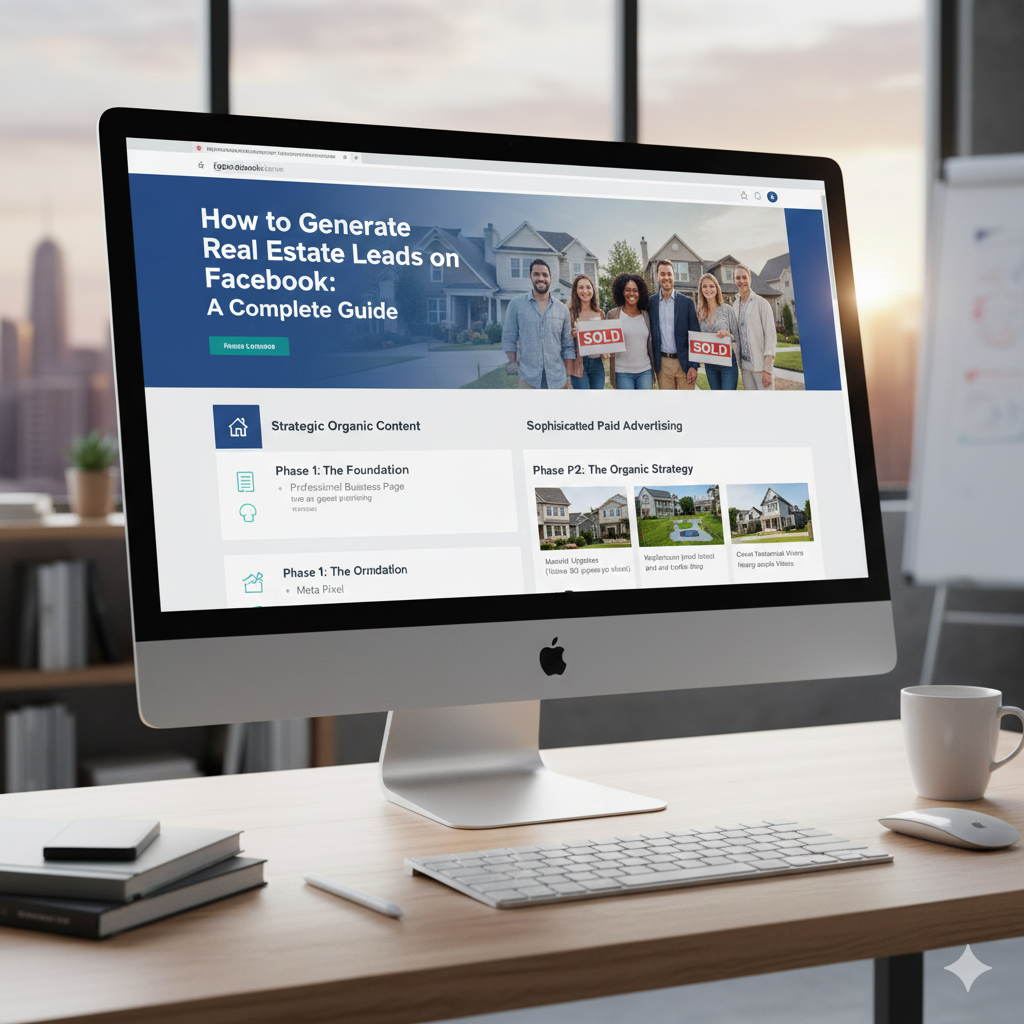
Introduction
Learning how to generate real estate leads on Facebook has become essential for agents who want to thrive in today’s digital marketplace. With over 2.9 billion active users, Facebook offers unparalleled access to potential buyers and sellers in your local market. Unlike traditional prospecting methods that require cold calling or door knocking, Facebook allows you to target specific demographics, neighborhoods, and buyer behaviors with precision. This guide reveals the exact strategies successful agents use to consistently generate qualified leads through Facebook’s powerful advertising platform and organic engagement tactics.
Why Facebook Remains the Top Platform for Real Estate Lead Generation
Facebook dominates the real estate lead generation landscape because it uniquely combines demographic targeting, behavioral data, and visual storytelling capabilities. The platform’s users actively share life events, job changes, relocations, engagements, and growing families, all of which signal potential real estate transactions.
Key advantages include:
- Advanced targeting options that reach buyers and sellers based on income, location, and life events
- Lower cost-per-lead compared to Zillow, Realtor.com, and other paid directories
- Built-in lead capture forms that eliminate friction in the conversion process
- Retargeting capabilities that keep your brand visible to interested prospects
- Video and carousel ad formats that showcase properties effectively
According to the National Association of Realtors, 47% of home buyers now use social media during their home search, with Facebook being the most-used platform. This shift makes mastering how to generate real estate leads on Facebook in 2025 non-negotiable for growth-focused agents.
Understanding Facebook’s Real Estate Targeting Options for Buyers and Sellers
The foundation of any successful facebook lead generation strategy for real estate agents starts with precise audience targeting. Facebook provides several targeting layers that help you reach the right prospects at the right time.
Demographic Targeting Essentials
Start by defining your ideal client profile using these criteria:
- Age range: First-time buyers (25-35), move-up buyers (35-50), or downsizers (55+)
- Income level: Target households earning above the median income for your market
- Homeownership status: Reach renters who may be ready to buy
- Location: Create radius targeting around specific neighborhoods or zip codes
Behavioral and Interest-Based Targeting
Facebook’s real estate facebook targeting options for buyers and sellers extend beyond basic demographics. You can target users based on:
- Recent engagement with real estate websites and apps
- Life events such as “Recently moved” or “Recently engaged”
- Interest in home improvement, interior design, or mortgage information
- Lookalike audiences based on your existing client database
Custom Audience Strategies
Upload your past client list, sphere of influence, or open house attendees to create warm audiences. These custom audiences convert 3-5 times better than cold traffic because they already know your name and reputation.
Creating High-Converting Facebook Ads for Real Estate Lead Generation
The best facebook ads for real estate lead generation combine compelling visuals, targeted messaging, and strategic offer positioning. Your ad creative determines whether prospects scroll past or stop to learn more.
Ad Format Selection
Video ads consistently outperform static images in real estate, generating 1200% more shares and significantly higher engagement. Create 30-60 second property tours, neighborhood highlights, or market update videos.
Carousel ads allow you to showcase multiple properties or highlight different features of a single listing. Use them to display before-and-after renovations, room-by-room tours, or curated property collections.
Lead form ads reduce friction by allowing users to submit information without leaving Facebook. These convert 2-3 times better than ads directing to external landing pages.
Crafting Irresistible Ad Copy
Your ad copy should speak directly to your prospect’s pain points and desires:
- For buyers: “See Homes Before They Hit the Market—Join Our Exclusive Buyer List”
- For sellers: “Find Out What Your Home is Worth in Today’s Market (Free Valuation)”
- For investors: “Discover Off-Market Deals and Fixer-Uppers in [City]”
Always include a clear call-to-action and eliminate industry jargon that confuses non-professionals.
Budget and Bidding Strategies
Start with a daily budget of $20-30 per ad set to gather performance data. Use Facebook’s “Leads” objective and automatic bidding initially, then switch to manual cost cap bidding once you establish your target cost-per-lead. Most successful agents aim for a cost-per-lead between $15-40, depending on market competitiveness.

Real Estate Facebook Lead Forms Best Practices
Real estate facebook lead forms best practices can dramatically improve your conversion rates and lead quality. The difference between a 2% conversion rate and an 8% conversion rate often comes down to form optimization.
Form Length and Field Selection
Keep it minimal. Request only:
- Full name
- Email address
- Phone number
- Optional: “Are you looking to buy or sell?”
Every additional field reduces conversion rates by approximately 5-10%. Resist the temptation to qualify leads through lengthy forms—save detailed qualification for follow-up conversations.
Pre-Filled Information
Enable Facebook’s auto-fill feature, which populates forms with the user’s profile information. This single feature can increase conversions by 30-40% by reducing the effort required to submit.
Privacy Policy and Compliance
Include a clear privacy policy link in your lead form. Transparency about how you’ll use contact information builds trust and ensures compliance with data protection regulations. Add a statement like: “We respect your privacy and will never share your information with third parties.”
Thank You Screen Optimization
Your thank you screen is premium real estate. Include:
- A confirmation message with next steps
- Your direct phone number for immediate questions
- A link to your website or featured listings
- Social proof (testimonials or recent sales)
Organic Strategies That Complement Paid Advertising
While paid ads generate leads quickly, organic Facebook strategies build long-term authority and reduce your cost-per-acquisition over time.
Content Marketing Approach
Share valuable content that positions you as the local market expert:
- Weekly market updates with sold data and inventory levels
- Home maintenance tips for each season
- Neighborhood spotlights featuring local businesses and schools
- Client success stories (with permission)
- Live Q&A sessions answering common buyer and seller questions
Post consistently—at least 3-4 times per week—to maintain visibility in your audience’s feed.
Facebook Group Strategy
Create or participate in local community groups where potential clients gather. Provide genuine value without overtly selling. Answer questions about the local market, share neighborhood events, and establish yourself as a helpful community resource.
Read: SaaS Digital Marketing Strategies That Actually Work in 2026
Video Marketing Excellence
Facebook’s algorithm heavily favors video content, particularly Facebook Live. Host weekly live sessions covering:
- New listings and open houses
- Market condition updates
- First-time buyer education
- Home staging and preparation tips
Lives receive 6 times more engagement than standard video posts and keep you top-of-mind with your sphere.
Advanced Retargeting Tactics for Maximum ROI
Most prospects won’t convert on their first interaction with your brand. Strategic retargeting keeps you visible throughout their decision-making journey.
Pixel Implementation and Tracking
Install the Facebook Pixel on your website to track visitor behavior. Create custom audiences of people who:
- Visited your listings page but didn’t submit a lead form
- Watched 75% or more of your property videos
- Engaged with your content but haven’t converted
- Visited your “About” page, indicating higher intent
Retargeting Campaign Structure
Build a retargeting funnel with escalating value:
- Days 1-3: Show social proof and testimonials to warm visitors
- Days 4-7: Offer a valuable lead magnet (market report, buyer guide)
- Days 8-14: Present a time-sensitive offer or featured properties
- Days 15+: Direct call-to-action encouraging immediate contact
This sequenced approach nurtures prospects from awareness to action systematically.
Measuring Success and Optimizing Campaign Performance
Data-driven optimization separates profitable campaigns from money-losing efforts. Monitor these key performance indicators weekly:
Cost Per Lead (CPL): Track this by audience segment. If CPL exceeds $50, pause and refine your targeting or creative.
Lead Quality Score: Not all leads are equal. Track how many leads respond to follow-up, schedule appointments, and ultimately close. A $30 lead that never responds is worse than a $50 lead who becomes a client.
Conversion Rate: Calculate the percentage of ad viewers who submit your lead form. Rates below 5% indicate targeting or creative issues.
Return on Ad Spend (ROAS): Measure total commission revenue generated divided by ad spend. Successful campaigns typically achieve 5:1 to 10:1 ROAS over a 6-12 month period.
Split Testing Framework
Continuously test these variables:
- Ad images (professional photos vs. lifestyle shots)
- Headline variations (question-based vs. statement-based)
- Audience segments (first-time buyers vs. luxury market)
- Call-to-action buttons (“Learn More” vs. “Get Free Report”)
Test only one variable at a time to identify what specifically drives performance improvements.
Common Mistakes That Waste Your Facebook Ad Budget
Even experienced agents fall into these traps that diminish results:
Over-targeting: Combining too many targeting criteria creates audiences too small for Facebook’s algorithm to optimize effectively. Keep audiences above 50,000 people.
Neglecting mobile optimization: 94% of Facebook users access the platform via mobile. Ensure your ads, lead forms, and follow-up landing pages load quickly and display properly on smartphones.
Inconsistent follow-up: The fastest follow-up wins the lead. Respond to new leads within 5 minutes—this single practice increases conversion rates by 400% compared to waiting an hour.
Generic messaging: Ads that could apply to any agent in any market fail to differentiate you. Highlight your unique value proposition, whether it’s neighborhood expertise, negotiation track record, or specialized buyer representation.
Abandoning campaigns too early: Facebook’s algorithm requires 50-100 conversions to optimize effectively. Give new campaigns at least 2-3 weeks and 100+ leads before making major changes.
Expert Implementation Strategy
After helping hundreds of agents implement these strategies, I’ve identified the success pattern that works consistently:
Month 1: Focus on building your foundation—install the Facebook Pixel, create buyer and seller lead magnets, and launch two basic ad campaigns with a combined budget of $30-50 daily.
Month 2: Analyze initial results, pause underperforming audiences, and scale winning campaigns by 20-30%. Begin content marketing to support paid efforts.
Month 3: Implement retargeting campaigns, launch video ads, and refine your lead nurture system. By this point, you should have clarity on your cost-per-lead and which targeting options work best in your market.
Most agents who follow this progression achieve a consistent flow of 30-60 qualified leads monthly by the end of quarter one.
Read: Why Your Business Needs a Facebook Agency in 2026 (USA)
Contact us for meta ads lead generation service for your business.
Book a free call.
Conclusion
Mastering how to generate real estate leads on Facebook requires combining strategic paid advertising with valuable organic content. By implementing precise targeting, compelling ad creative, optimized lead forms, and systematic follow-up, you can build a predictable lead generation system that grows your business consistently. Facebook’s targeting capabilities and massive user base make it the most cost-effective platform for reaching buyers and sellers in your market. Start with the foundational strategies outlined here, track your results meticulously, and scale what works. The agents who commit to this approach replace expensive lead services with a sustainable, agent-owned lead generation system that compounds in effectiveness over time.
Ref. https://www.facebook.com/business/goals/run-facebook-ad-campaigns
FAQs
Q: How much should I spend on Facebook ads to generate real estate leads?
A: Start with a daily budget of $20-30 per ad campaign. Most successful agents spend $600-1,500 monthly on Facebook ads and generate 30-60 qualified leads, resulting in 2-5 closed transactions per month from Facebook alone.
Q: What type of Facebook ad works best for real estate lead generation?
A: Lead form ads using video content consistently outperform other formats. Property tour videos and market update videos in a lead form ad typically achieve 2-3 times higher conversion rates than static image ads directing to external landing pages.
Q: How quickly should I follow up with Facebook leads?
A: Contact new leads within 5 minutes of submission. Studies show that leads contacted within 5 minutes are 400% more likely to convert than those contacted after one hour. Set up instant notifications and have a response system ready.
Q: Can I target specific neighborhoods with Facebook ads for real estate?
A: Yes. Facebook allows radius targeting as precise as 1 mile around any address, and you can also target specific zip codes. Combine location targeting with demographic filters like income level and homeownership status for maximum precision.
Q: What’s a good cost per lead for real estate Facebook ads?
A: A competitive cost per lead ranges from $15-40 depending on your market. Premium markets like San Francisco or New York may see costs of $50-75 per lead, while smaller markets often achieve $10-25 per lead. Focus on lead quality over pure cost.